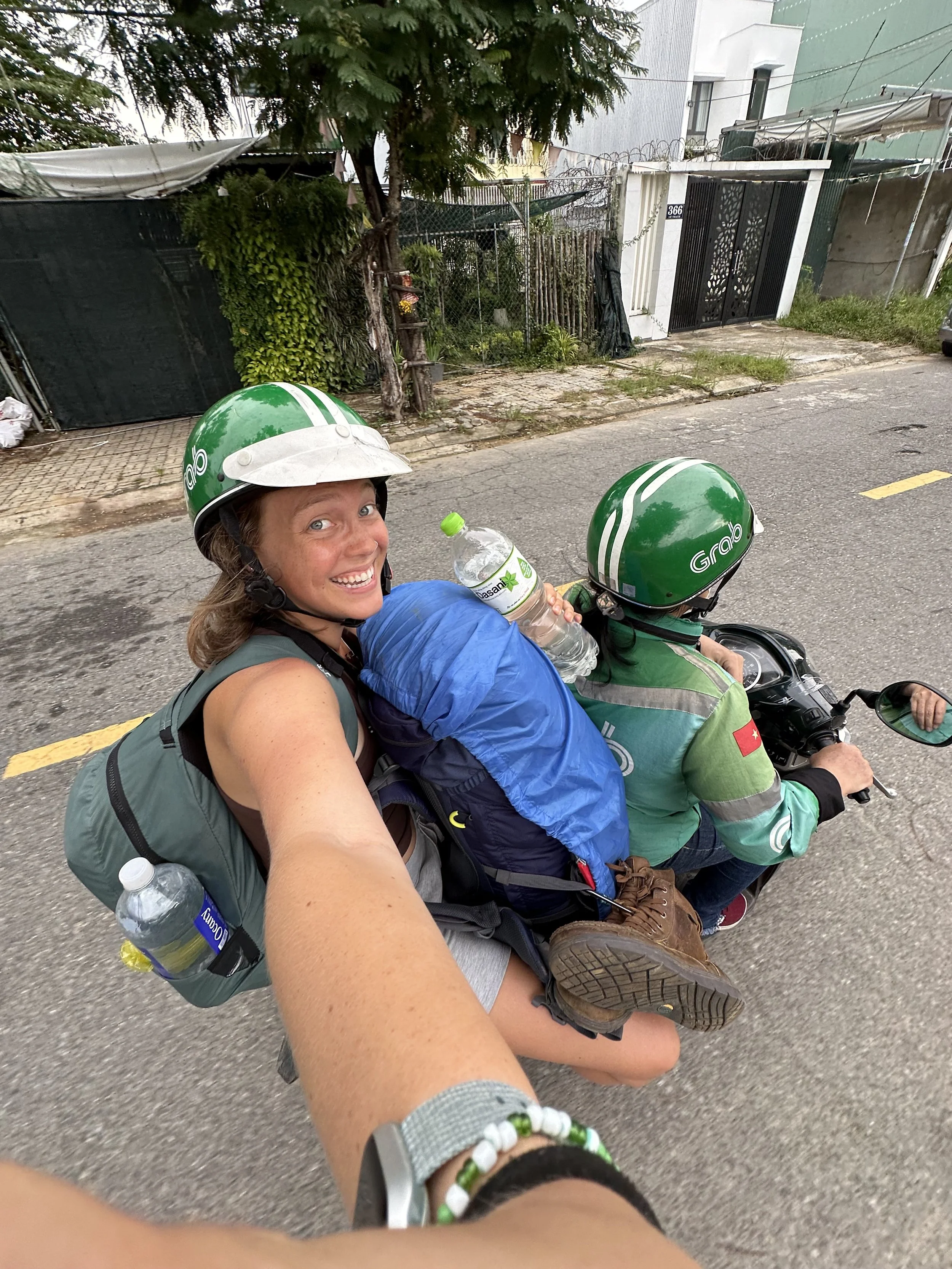
How to: Conquer Solo Travel Concerns
”Solo travel.” For many, these two words can be some of the most daunting ones placed together. Leaving “home,” leaving the country… alone. Exploring unknown places, navigating language barriers, walking down unfamiliar roads with no guide… Those who solo travel don’t get rid of the fear; they do it anyway. But if you’re just getting started, find yourself stuck in “planning paralysis” for a dream trip, there are genuine concerns that we should address. I don’t want to scare you away from solo travel, I want to equip you with the realness of it… not just what Instagram influencers show. So, here’s to acknowledging the most common travel concerns and conquering them.
Table of Contents
1.The Issue | 2.The Strategy | 3.The Case Study | 4.The Invitation
1. The Issue
So, you’re struggling with wanting to solo travel, but not knowing how to mitigate your concerns. That’s completely normal. In fact, I faced the exact same challenge. Let’s discuss the Top 6 Solo Travel Concerns (based on my personal experience and information gathered from other solo travelers).
Safety — Safety concerns come in different shapes and sizes. Physical safety for self and property, as well as emotional wellbeing are all very personal, individualized concerns.
Health — Your immune system will be worn down by being introduced to new environments and new people continuously.
Language Barrier — If you’re reading this blog without translating it, congratulations, your life is easier than most when traveling. At least 18% of the world speaks English, which doesn’t sound like a lot, but it’s over 1,4B people! That being said, not everyone speaks your language… expect that.
Culture Shock — This is simply unavoidable… No matter how much reading you do ahead of time on a particular culture, experiencing it is entirely different.
Budget — Unfortunately, it’s important for traveling. That being said, you need far less than people often imagine. Spending less per month traveling than I did when living in the Caribbean, I was able to go to an average of 2,5 countries per month, visit historical places and museums, take weekend trips, eat delicious ethnic foods, and have experiences I never could have if I stayed “home.” But, this is very personal and depends on a multitude of factors (e.g., how much you have to start, if you’ll be earning an income along the way, what your priorities are, etc.).
Loneliness — While traveling alone can be freeing, invigorating, and magical, it can also be lonely, confusing, and tough being with yourself all the time. The last part of that sentence might sound funny, but it’s true. When you have no one’s company but your mind and heart, a lot comes up.
2. The Strategy
While I can’t guarantee that what I did will be your magic fix, by sharing my solutions, I do promise you’ll have extra tools in your toolkit that could help in the future. When I was faced with these concerns, I felt scared, hopeless, and stuck. Through my own experiences and the help of those who went before me, I found key steps that drastically flipped the script. Here’s my professional playbook for you, laid out bare.
Safety
Don’t walk around at night alone. Travel in groups (you make plenty of friends for this), ask a guy to go with you (one that you trust, obviously), or simply go during the day. You can also call a rideshare if you still want or need to be out past sundown.
Have a way to alert your contacts that you’re in danger. I wear an Invisawear necklace, which you will see me reference often. I love this added layer of protection and peace-of-mind I get from knowing my contacts will be notified at the click of a button.
Track your items. I use Apple Airtags in my bags and mixed among my items.
Lock your items. Staying in hostels, you should have a locker for your personal items. Size of the locker varies, but you will at least be able to lock up your passport and valuable items. I use the Prosafe 1000 Travel padlock from Pacsafe.
Plan rest days. I didn’t do this my first month, and it wore me down. Even if you are the most social and outgoing person ever, you still need a day here-and-there to rest and recoup. Learn how often you need them, and don’t skip them.
Be in the right situations. Don’t put yourself in situations where you know you will be uncomfortable, nervous, or really anything but happy and safe. Protect your peace.
Health
Take supplements specifically for travel. I have found the Co-Pilot The Travel Brand travel supplements work great for me. Created by travelers, for travelers, with tested ingredients, and in sustainable packaging that you can use for a deck of cards. Use the link above to get 15% off your order on Amazon, or use “TrinTravels” on their website to receive 15% directly from them.
Drink your water. A good rule of thumb is drink in fluid ounces the temperature in Fahrenheit (90℉ is 90fl oz) or 1 liter per 10℃ (20℃ is 2L) when outside. If you sweat or workout, drink more.
Eat your fruits and veggies. I know I sound like your grandmother right now, but the best way to fight off illness is eating the rainbow.
Choose who you share with. I’m just going to leave this out there… be careful who you decide to share things with, whether that be food and drinks or otherwise. Germs (of all kinds) are real.
Language Barrier
Use Online Tools. Websites and apps like Google Translate and DeepL are great. Remember to download the languages for offline use to minimize data usage.
Get Creative. If translation apps aren’t an option, you’ll be surprised by how creative you can be to communicate with someone without words. Pointing, facial expressions, hand signals, sound effects… You’ll figure it out.
Learn A Little. You don’t have to become fluent by any means, but just knowing a few words and phrases will take you far.
Culture Shock
Keep An Open Mind. Don’t go to a new place with expectations. It’s not always right vs wrong, good vs bad. It’s just different.
Observe, Don’t Critique. Don’t focus on the differences as a bad thing, but find the beauty in different ways of getting to the same destination.
Budget
Keep Track. I use the TravelSpend app and have categorized my spending into the following (percentage of my budget towards this category):
Food: Groceries (20%) and eating out (15%)
Transportation: Big tickets (15%) and public transportation (10%)
Accommodation: Hostels (15%)
Activities & Sightseeing: Museums, activities, etc. (15%)
eSim: Data plan (5%)
Shopping: Souvenirs and items on an as-needed basis (5%)
*This is just an example. Shift these percentages according to your personal priorities and financial situation.
Creative Accommodation. You don’t have to pay for your accommodation. Volunteering, couch surfing, staying with locals, making friends… it’s all part of the fun (and saving on money).
Loneliness
Choose When To Be Alone (& Not). Especially if you’re staying in hostels, you have ample opportunity to engage and socialize.
Use Digital Communities. There are so many amazing apps, Facebook groups, and forums out there… use them!
Facetime Your Friends/Family. It’s not quite the same as being in person, I know, but it does count for something. Seeing their faces does a lot for your mental health.
Sit In The Silence. The most difficult piece of advice I have to give is to get comfortable with the uncomfortable. Things will surface, you’ll learn about parts of yourself you never knew before, and memories will come to mind. Lean into the feelings and expand from them.
3. The Case Study
Now, I would absolutely love it if you took what I say at face value. And while I truly hope we can foster a deep, meaningful trust between us, I don’t assume you will believe me automatically. For that reason, I’ve done a little digging. Here’s a research study done by Griffith University in Australia that applies to the logic I’ve laid out for you in The Strategy.
In this study, 28 Australians were interviewed, half of whom solo-traveled and the other half never solo-traveled. The aim of the study was to determine the underlying motivations (and constraints) for solo travel. 10 of the 14 non-solo-travelers indicated an interest in solo travel, but listed safety, cost, and social constraints as the top three inhibitors preventing them from doing so. Safety and cost are easily understood, but “social constraints” were defined as “no one to share with or rely on, and someone who is always available.” This study is very small and surveyed only Australians, but it can speak to the larger implications of solo travel concerns. (1) Many people want to solo travel (2) They have concerns around safety, cost, and social constraints (3) Life-stage, freedom, flexibility, and self-discovery are the motivations (based on the interviewed solo travelers, and the motivations for the non-solo-travelers to start).
4. The Invitation
You read the title of this page and thought, “Wow. I really want to know that.” Or, maybe it wasn’t until you read The Issue that made you realize you struggle with the exact same thing. Perhaps you didn’t even think that you have this issue, but you were curious, and when reading The Strategy, you found some useful nuggets of wisdom. Regardless of what step you first connected with, if you’ve made it this far, you got value from this. And for that, I am eternally grateful. Thank you, truly, for spending the last few minutes with me while reading.
If this resonated with you, to any degree, and you want more — you have a desire to start changing your life in a way that feels genuine, free, and you… I invite you lean into that pull on your heart. I would love to have a conversation with you — hear your fears, your dreams, your goals. No commitments, no expectations, just a conversation. I’ll be waiting with an open heart. Talk soon.